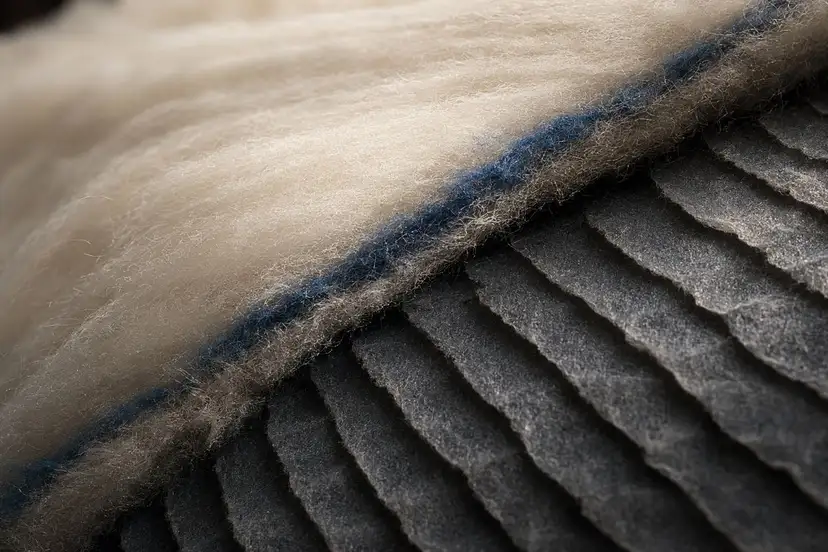
Protease for Wool Finishing | Lanefold
Lanefold supplies protease for wool finishing and surface modification, helping wool processing mills improve handle, surface cleanliness, shrink-control programs, and reproducible lots.
Request pricing Lanefold supplies protease for wool finishing and surface modification, helping wool processing mills improve handle, surface cleanliness, shrink-control programs, and reproducible lots.
Request pricingWool finishing is tactile work, but it is also process control. The right protease can help modify the wool fiber surface so the fabric feels cleaner, softer, and more consistent without losing sight of shade, strength, and reproducible lot performance.
Lanefold is an enzyme supplier for wool processing mills that need practical buying guidance, not generic enzyme language. We help finishing teams select protease options around real bath conditions, substrate behavior, and target handfeel.
Protease is commonly considered when a mill wants controlled surface modification on wool. Depending on the fabric, yarn construction, and process sequence, it may support:
Protease is not a one-size-fits-all addition. Wool responds to bath history, dye route, mechanical movement, temperature, pH, time, and rinse efficiency. Lanefold helps you evaluate the whole finishing route before recommending a protease.
A protease route should improve touch without creating excessive fiber weakening, uneven surface attack, or lot drift. We help define a controlled operating window so the enzyme step supports the final handle target rather than introducing another variable.
Surface contamination, residual proteinaceous material, and uneven scale response can make finishing less predictable. A suitable protease may help prepare the wool surface for a cleaner, more uniform finish, reducing the need for corrective softening, rewashing, or repeated finishing passes.
Wool shade can be sensitive to route changes. We review when protease should be placed in the process, how it interacts with dyed goods, and what downstream rinsing or neutralization is needed to protect shade consistency.
For mills working on dimensional stability, protease may be part of a balanced shrink-control approach. It should be considered alongside mechanical action, oxidation or resin routes where used, fabric construction, and final finishing targets.
We begin with the conditions your mill already runs, then narrow the enzyme choice around the result you need.
For premium worsted or wool-rich fabrics, protease selection must preserve a refined hand while avoiding excessive surface degradation. The objective is a cleaner touch and more controlled drape, not aggressive fiber removal.
In wool-rich knits, the finishing route often needs to balance softness, dimensional stability, and surface appearance. Protease can be evaluated where the mill wants better handle and reduced harshness while maintaining garment performance.
Some mills assess protease before softening or final finishing to improve surface cleanliness and make the later step more reproducible. This can be valuable when rework is driven by uneven touch or inconsistent surface response.
Protease may be evaluated as part of a broader shrink-control program, especially where the mill wants a controlled fiber-surface contribution rather than relying only on stronger chemical or mechanical interventions.
A protease trial for wool should be small enough to control but realistic enough to predict production behavior. We recommend comparing treated and untreated goods under the same finishing route, then reviewing:
The decision should be based on the finished article, not only the enzyme bath. Lanefold helps structure trials around the quality checks your finishing team already trusts.
When requesting a quote, include the operating details that shape enzyme choice. The more complete the process picture, the faster we can recommend a suitable option.
If you are evaluating protease for wool finishing, Lanefold can help you match the enzyme to the fabric, bath conditions, and production target.
Use the on-site request form and share your current finishing route, target handfeel, and any shrink or shade requirements. We will review the application and prepare a practical quote for your mill.
Tell us your application and volume — we reply with pricing and lead time.