How scouring residue shows up later as wool finishing defects
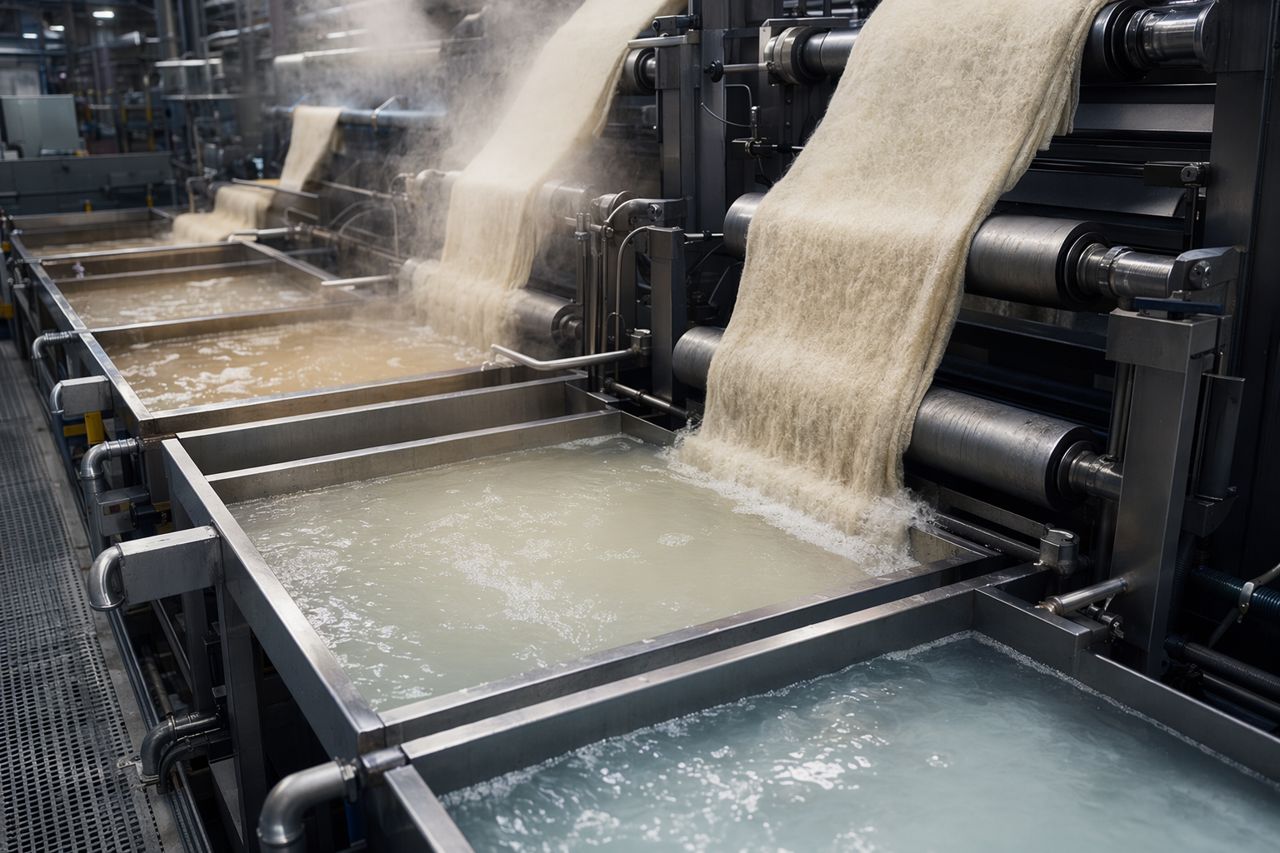
In a wool processing mill, finishing problems rarely begin at the last machine. A harsh handle, uneven shade, weak shrink-control response, or unexplained rework can often be traced back to the first wet stage: scouring.
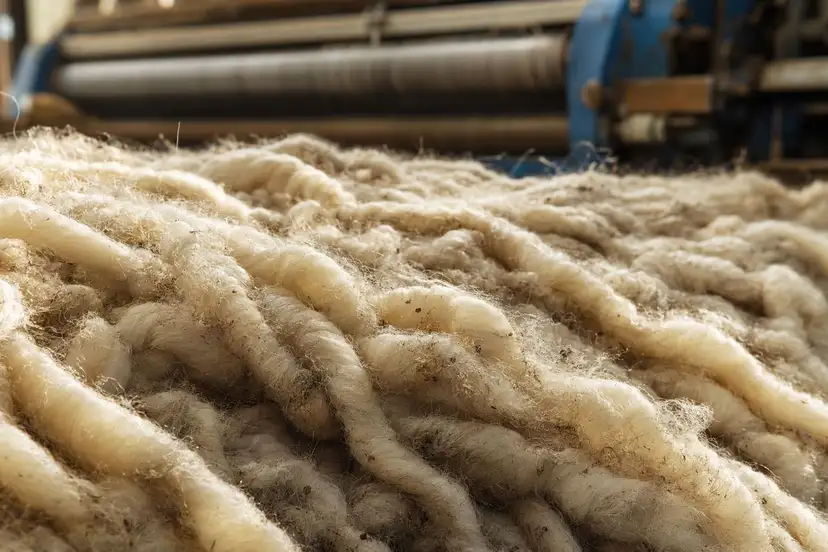
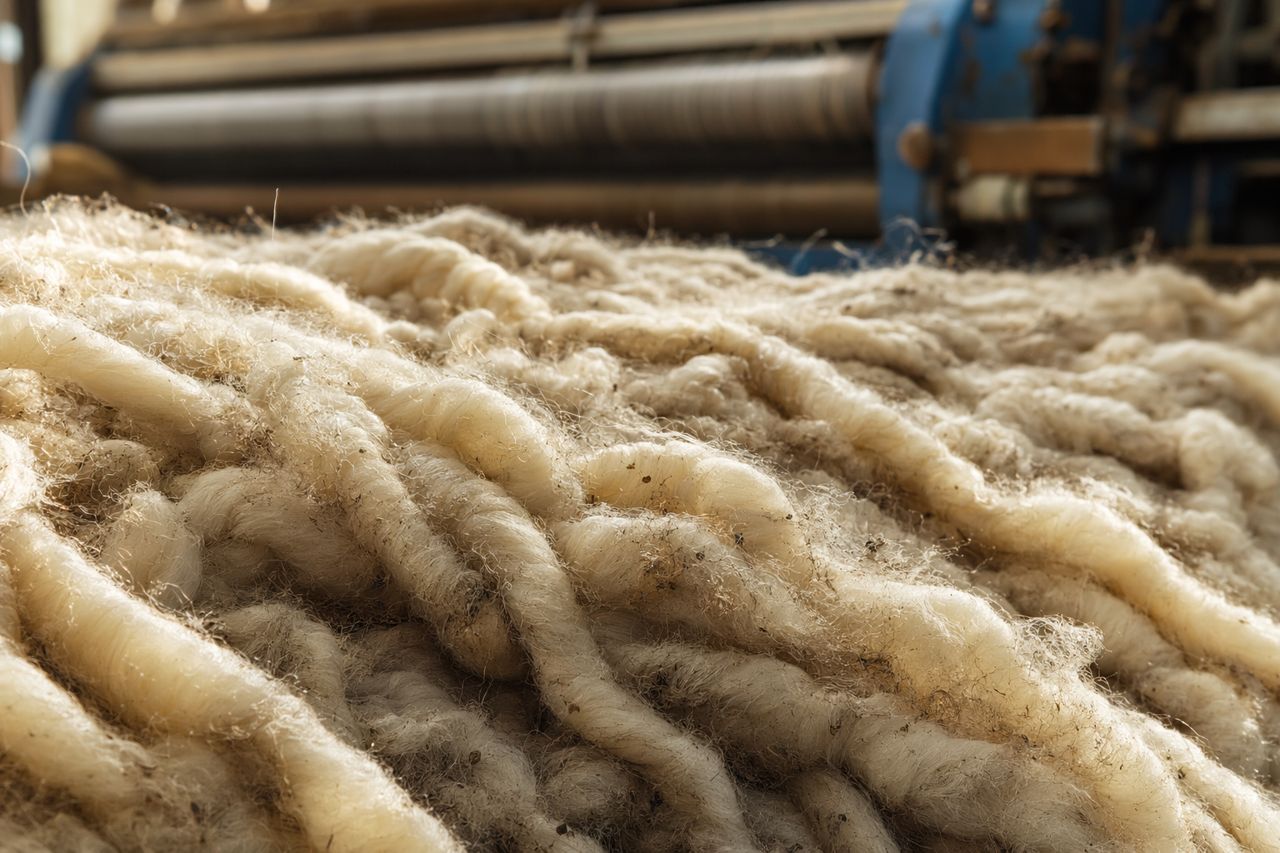
Raw wool brings in grease, wax, suint, vegetable matter, mineral soil, skin flakes, and variable farm-level contamination. Scouring is designed to remove enough of that load to give finishing a clean, predictable fiber surface. But when residue remains, it does not always announce itself immediately. It can travel quietly through preparation, dyeing, milling, softening, drying, and final inspection before it becomes a cost.
For a finishing manager, the issue is not simply whether the wool looks clean after scouring. The practical question is whether the fiber surface is clean enough, even enough, and stable enough to finish reproducibly lot after lot.
Lanefold works as an enzyme supplier for wool processing mills that need practical, production-minded support around surface cleanliness, handle control, shrink management, and rework reduction. This article explains where scouring residue hides, how it affects finishing, and where enzyme-supported process control can help create a more dependable base for downstream quality.
What counts as scouring residue?
Scouring residue is any unwanted material that remains on or between wool fibers after the wash sequence. It may be natural, added during processing, or formed by poor removal conditions.
Common residues include:
- Wool grease and wax that remain in patches rather than as an even trace level
- Suint and salts that can affect bath behavior and handle
- Fine soil and mineral particles trapped in fiber assemblies
- Vegetable fragments and cellulosic fines that can hold dirt and interfere with surface clarity
- Residual detergents, alkali, builders, or lubricants carried from earlier baths
- Re-deposited soil from overloaded liquor, poor rinsing, or unbalanced emulsification
- Processing aids that are useful upstream but disruptive when carried into dyeing or finishing
The problem is often not one residue by itself. Finishing defects usually come from combinations: a little grease plus fine soil, a trace of processing aid plus unstable pH carryover, or waxy patches plus aggressive mechanical action later in the line.
Why residue may pass early checks
Scoured wool can appear acceptable in the bowl, on the belt, or after drying while still carrying uneven surface contamination. This is especially true when the residue is thin, translucent, or hidden inside dense fiber bundles.
Several production factors can mask the issue:
- Moist wool can feel cleaner than it will behave when dry.
- A small test area may not represent the full lot width or bale blend.
- Residue can be uneven across the load, especially where liquor flow is inconsistent.
- Visual brightness does not always equal surface readiness.
- Downstream heat, pH movement, and mechanical work can reveal residue that looked harmless earlier.
That is why scouring performance should be judged by downstream finishing behavior as well as by immediate cleanliness.
How residue affects handle
Handle is where many mills first feel the cost of scouring residue. Residual grease may seem like it should soften wool, but uneven grease and wax rarely create a premium handle. They create inconsistency.
A lot may show:
- Greasy or slightly boardy zones
- Patchy softness after softener application
- Reduced bloom after relaxation
- A dull, coated feel rather than clean loft
- Higher dependence on corrective softening
If the fiber surface is not uniformly receptive, finishing auxiliaries do not distribute as intended. The mill may add more softener, extend processing, or increase mechanical action to compensate. Those fixes can increase cost and still leave the lot feeling uneven.
Cleaner surface conditions give the finishing manager a better chance to build handle deliberately rather than correct it late.
How residue interferes with shrink control
Shrink control relies on predictable interaction between the wool surface, the bath, and the chosen finishing chemistry or mechanical route. Residue can interfere with that interaction in several ways.
Grease and waxy patches may shield parts of the fiber surface. Fine soil can create micro-roughness or hold other contaminants. Residual processing aids can change wetting and drainage behavior. The result is a lot that responds unevenly to a shrink-control process.
Common symptoms include:
- Variable area stability between panels or rolls
- Uneven felting response during milling or washing trials
- More rejects after customer wash testing
- The need for wider safety margins in process settings
- Rework that improves one defect while risking handle or strength
For mills producing machine-washable wool, knitwear yarns, blankets, suiting, or premium apparel fabrics, this variability can quickly become a commercial issue. Shrink control is not only a technical measure. It is a customer promise.
How residue can disturb shade and optical quality
Dyehouses often feel scouring residue as shade noise. Residue changes how the fiber wets, how dyes and auxiliaries move into the fiber assembly, and how light reflects from the finished surface.
Finishing teams may see:
- Cloudy or slightly smoky shades
- Barre-like variation linked to uneven preparation
- Dullness after drying
- Shade drift between nominally similar lots
- Poor reproducibility when recipes are repeated
- More corrective shading or blending work
The challenge is that shade variation may be blamed on dyeing alone. In reality, the dye bath may be responding to an uneven surface created earlier. When the substrate entering dyeing and finishing is inconsistent, even a well-controlled recipe has to work harder.
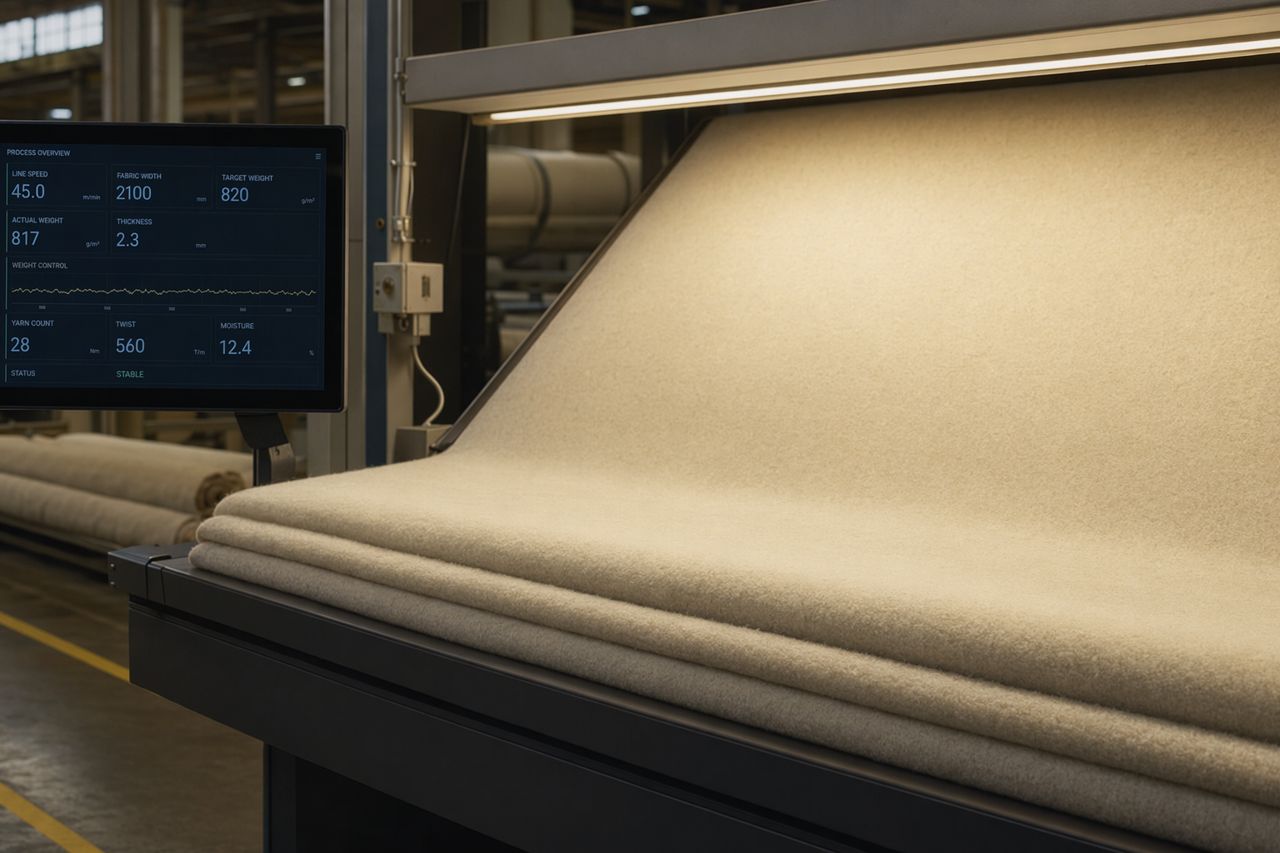
A clean, even wool surface supports clearer shade, steadier uptake behavior, and better confidence when scaling from trial to production.
How residue contributes to soil attraction and surface marking
Some residues are tacky, hydrophobic, or particle-holding. They can attract lint, fine soil, machine dirt, and loose fiber fragments during later handling. This can lead to surface defects that appear late, when the value already added to the lot is high.
Watch for:
- Specking or fine contamination after drying
- Darker marks at crease points or contact areas
- Soil pick-up around guide surfaces
- Sticky deposits on rollers or belts
- More frequent cleaning stops
- Inspection downgrades that are hard to trace
When residue transfers from wool to machine surfaces and back again, the problem becomes cyclical. A single contaminated lot can affect the cleanliness of subsequent production unless cleaning and segregation are disciplined.
How residue can increase fiber stress and rework
Residue-driven defects often lead to reprocessing: extra washing, extra softening, shade correction, additional milling, or more aggressive mechanical finishing. Each correction has a cost.
The direct costs are water, energy, labor, chemicals, machine time, and delayed shipment. The hidden costs are often larger:
- Fiber strength loss from unnecessary wet processing
- Increased risk of felting or dimensional change
- Handle flattening from over-treatment
- Higher shade correction complexity
- Reduced lot confidence at final inspection
- More conservative production planning on future orders
Rework also creates decision pressure. The team must choose between shipping a marginal lot, reprocessing with risk, or downgrading. Better scouring consistency reduces the number of times those decisions appear.
Where enzyme-supported processing can help
Enzymes are not a replacement for sound scouring practice. They work best when the mill already controls loading, liquor movement, temperature window, bath time, pH range, rinsing, and mechanical action. Used correctly, enzyme-supported steps can help mills target specific surface issues without relying only on harsher corrections.
Depending on the wool type and route, an enzyme program may support:
- More selective surface cleanup before finishing
- Improved removal of certain organic residues and fines
- Better wetting and surface uniformity when paired with suitable auxiliaries
- Cleaner preparation for shrink-control steps
- Reduced dependence on late corrective washing
- Better lot-to-lot reproducibility under defined bath conditions
The key is matching the enzyme system to the mill objective. A carpet wool line, a knitwear yarn route, and a fine apparel fabric route do not need the same finishing profile. Lanefold looks at the buyer's actual production priorities: handle, shade preservation, surface cleanliness, shrink control, fiber strength, and rework reduction.
Production questions to ask when defects point upstream
When finishing defects may be connected to scouring residue, start with a production review rather than a single-lot blame exercise.
Useful questions include:
- Where does the defect first become visible? After dyeing, after softening, after drying, after pressing, or only at inspection?
- Is the problem random, edge-related, batch-related, or blend-related? Pattern tells you whether the source is liquor flow, raw material variation, machine contact, or carryover.
- Does the lot feel uneven before finishing auxiliaries are added? Early tactile differences often predict final handle variation.
- Are rinse stages removing what the scour has lifted? Soil removal is only successful if it leaves the system.
- Are processing aids compatible across the route? An aid that helps in one bath may disturb the next.
- Is rework repeating the same defect pattern? If so, the issue may be embedded in surface condition rather than final recipe settings.
- Are strong corrections being used to solve a preparation problem? Late force can damage fiber value.
These questions help the mill separate dyeing error, finishing imbalance, mechanical marking, and upstream residue carryover.
A practical control approach for mills
Residue control is strongest when it is managed as a route-wide quality variable. A practical approach includes:
- Define the required surface standard for each product family.
- Check scouring consistency against downstream finishing results, not only immediate appearance.
- Track handle, shade, shrink behavior, and rework by lot and raw material source.
- Keep bath conditions within defined windows, especially where wool sensitivity matters.
- Avoid overloading scouring baths beyond their soil-carrying capacity.
- Rinse with enough discipline to prevent re-deposition.
- Review processing aid compatibility across scouring, dyeing, and finishing.
- Trial enzyme-supported steps on representative production material, not only ideal lab samples.
- Measure success by commercial outcomes: fewer defects, less rework, steadier lots, and preserved fiber value.
The goal is not to make scouring more complicated. The goal is to make finishing less surprising.
What Lanefold brings to the discussion
Lanefold focuses on enzyme solutions for wool processing mills where textile tactility and process control have to work together. We speak in the language of production: cleaner surfaces, steadier handle, preserved shade, controlled shrink response, fewer corrective baths, and reproducible lots.
When a mill contacts Lanefold about scouring residue or finishing defects, the most useful starting information is practical:
- Wool type and product route
- Current scouring and rinse sequence
- Downstream finishing objective
- Defect description and where it appears
- Bath condition ranges used in production
- Rework history and commercial impact
- Any restrictions around handle, shade, or fiber strength
From there, we can help assess whether an enzyme-supported adjustment belongs in the route, what it should be asked to do, and how to trial it without disrupting production.
Request a quote
If scouring residue is showing up as handle variation, shade dullness, shrink-control inconsistency, surface marking, or repeated rework, Lanefold can help you evaluate an enzyme approach for your mill conditions.
Use the on-site request a quote form and include your wool type, process route, target finish, and the defect you are trying to reduce. We will respond with a production-minded recommendation for the next step.