A Finishing Manager’s Map of Wool Felting Risk
Felting risk is rarely caused by one variable. In a wool processing mill, it builds when fiber condition, machine action, bath chemistry, and wet handling all push in the same direction. A finish can look stable in one lot, then tighten, board, shade-shift, or lose softness in the next because the total risk load has changed.
For finishing managers, the practical question is not simply which chemistry is in the bath. It is whether the whole process is arranged to protect handle, shrink control, surface cleanliness, shade preservation, and fiber strength across reproducible lots.
Lanefold works as an enzyme supplier for wool processing mills with this production reality in mind: chemistry performs best when the surrounding mill conditions are understood, controlled, and repeatable.
Why wool felts when the process gives it permission
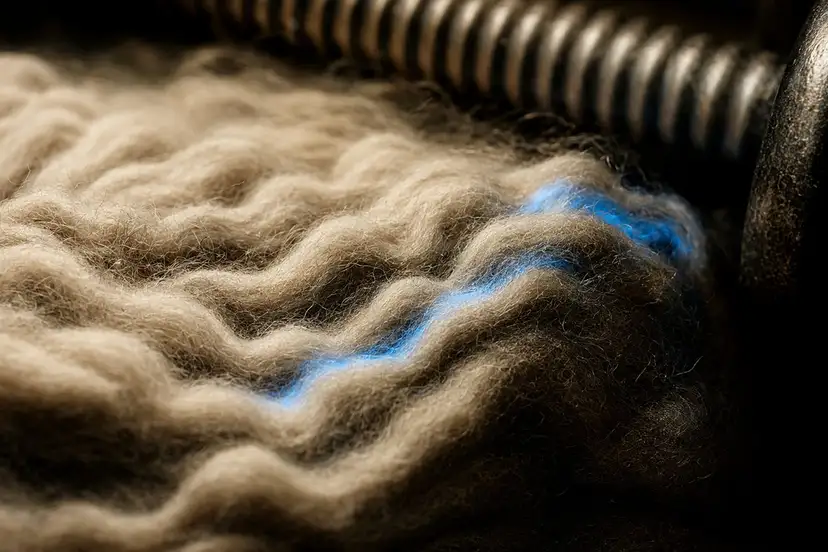
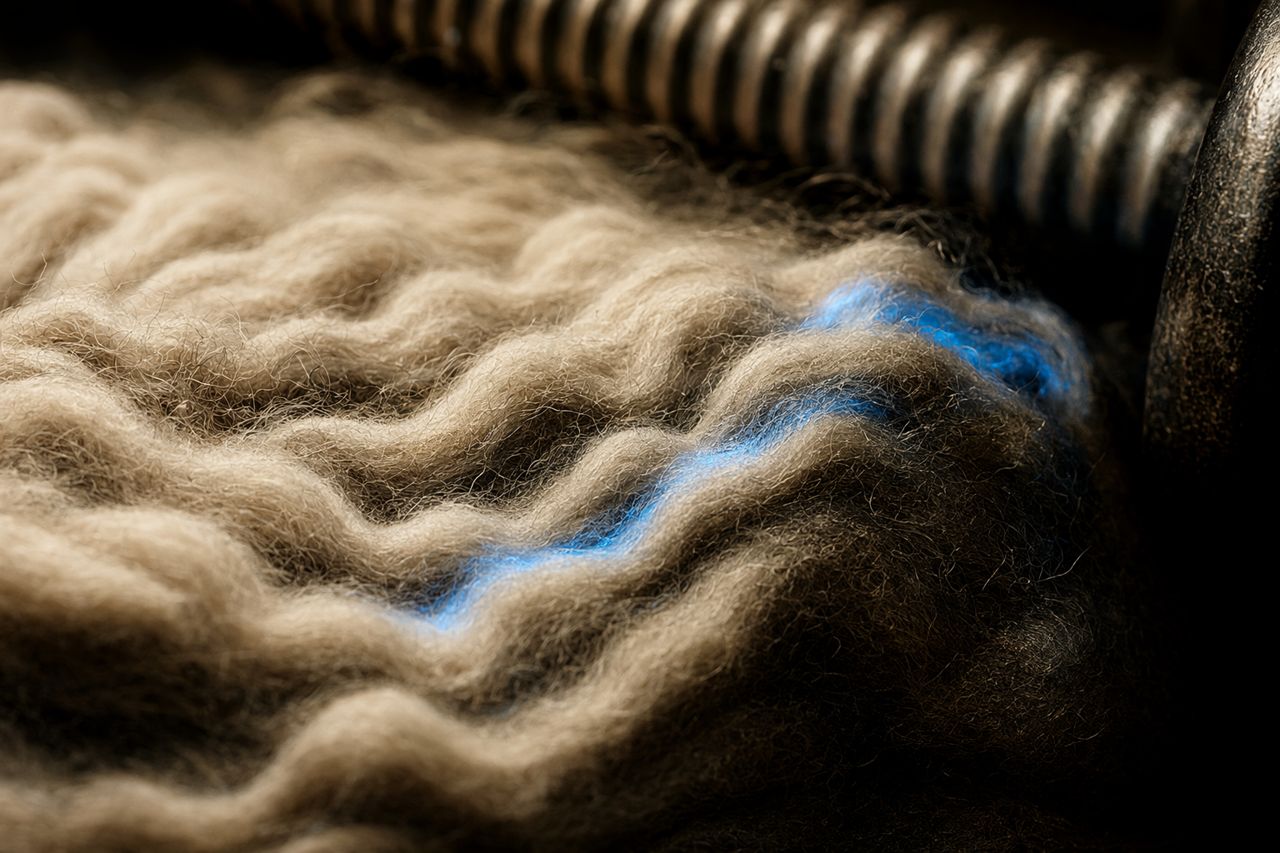
Wool fiber has a directional scale structure. Under moisture, heat, mechanical movement, and certain chemical conditions, fibers can migrate and interlock. That interlocking is what creates unwanted felting, dimensional change, surface harshness, and rework.
The finishing bath may be blamed first, but the bath is only one part of the mechanism. Felting tendency often increases when several small factors align:
- Opened fiber scales and high surface friction
- Aggressive liquor movement or fabric-to-metal contact
- Long wet handling between steps
- Sudden bath changes that shock the fiber surface
- Residual processing chemicals that disturb the finish
- Inconsistent lot history before finishing
A risk map helps teams separate causes, assign controls, and avoid treating every problem as a chemistry problem.
The four-zone felting risk map
1. Fiber variables: the starting condition of the lot
No two wool lots behave exactly the same. Micron, crimp, staple history, previous scouring quality, carbonizing exposure, dyeing route, and blend composition all influence how the fiber responds in finishing.
Watch for higher-risk incoming conditions:
- Fine wool with high surface sensitivity
- Lots with uneven scouring or residual grease
- Fabric with variable relaxation history
- Blends where wool and non-wool components respond differently
- Dyed goods where shade depth magnifies surface change
- Reprocessed or reworked material with an unknown wet history
Production implication: the same bath recipe can produce different handle and shrink outcomes if incoming lots are not grouped by risk. A simple incoming-risk note on the finishing ticket can help operators adjust machine gentleness, bath transitions, and hold times before problems appear.
2. Machine variables: where good chemistry can become aggressive
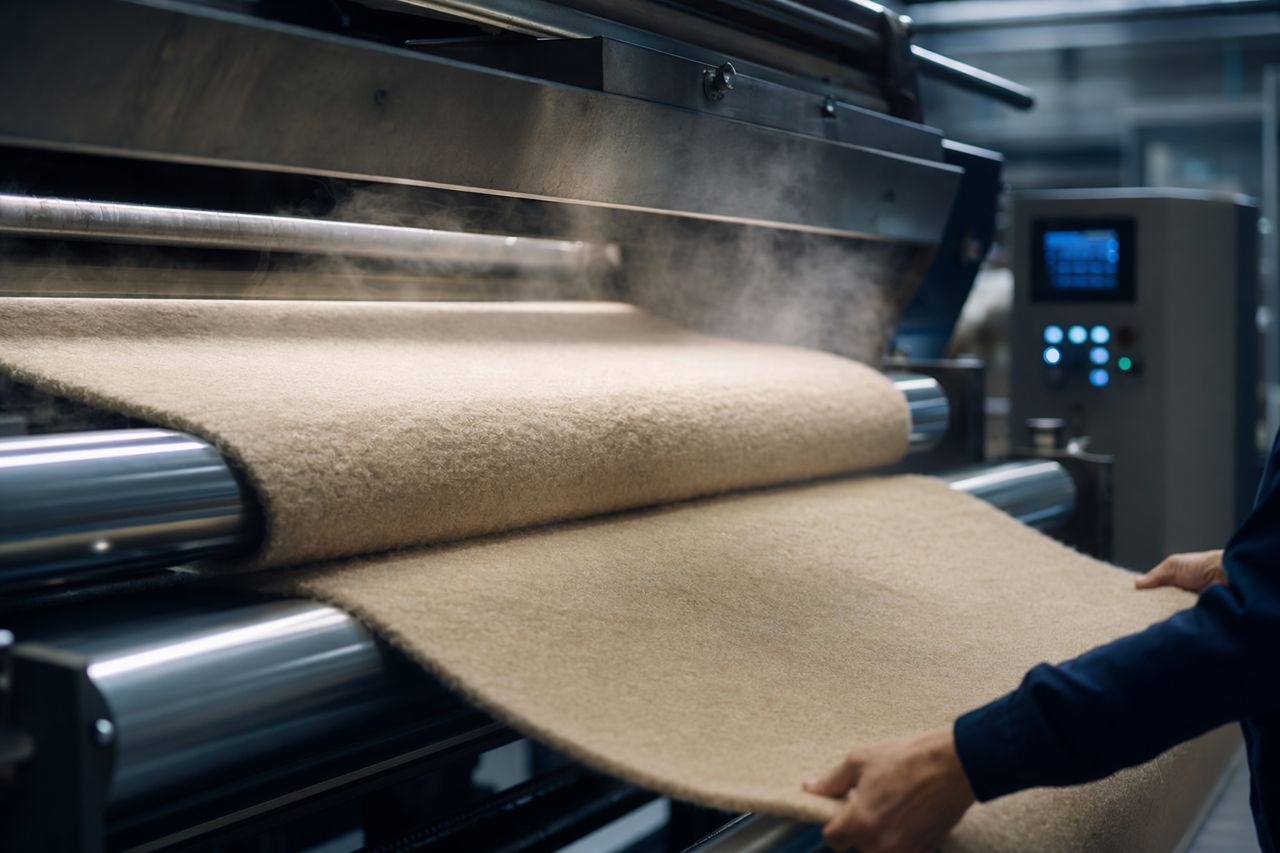
Mechanical action is one of the strongest drivers of felting. Even a well-selected enzymatic process can become risky if the machine delivers excessive agitation, fabric compression, rope tension, roller pressure, or repeated abrasion.
Key machine checks include:
- Fabric path and contact points
- Rope formation, twisting, and crowding
- Roller pressure consistency
- Pump intensity and liquor turbulence
- Batch size versus machine loading
- Start-stop events and dwell before draining
- Temperature ramp stability and setpoint control
Production implication: if felting appears at edges, creases, pressure zones, or rope-marked areas, the root cause may be mechanical concentration rather than bath chemistry. Mapping where the defect appears on the fabric often reveals the machine-side driver.
3. Chemistry variables: not just the enzyme, but the bath environment
In wool finishing, enzyme selection matters. But enzyme performance also depends on the full bath environment: pH window, temperature profile, residual peroxide or reducing agents, surfactant compatibility, salts, dyes, auxiliaries, and metal contamination.
A good enzymatic wool process should be evaluated for:
- Controlled surface effect without harsh handle
- Fiber strength preservation
- Shade stability across sensitive colors
- Compatibility with mill auxiliaries
- Predictable response under normal bath variation
- Clean rinse-down and low residue contribution
- Reproducibility in production-scale equipment
Production implication: chemistry should be selected for the mill’s actual operating window, not only for a lab ideal. If the bath has fluctuating pH, carryover, or variable heat-up behavior, the process should be tested under those realistic conditions before full adoption.
4. Handling variables: the overlooked wet minutes
Felting risk continues outside the active treatment step. Wet wool remains vulnerable during loading, draining, rinsing, transfer, hydro-extraction, and staging before drying. A gentle bath can still be followed by rough handling that tightens the fabric.
Handling risk increases when:
- Wet fabric waits under its own weight
- Transfers are rushed or uneven
- Rinses create sudden thermal or chemical shock
- Goods are over-extracted or compressed
- Operators manually pull or stretch sensitive pieces
- Lots queue unpredictably between wet and dry steps
Production implication: finishing SOPs should include the minutes between named steps. If operators only control the recipe but not the wet handling route, lot-to-lot variation remains difficult to eliminate.
How to read the risk map in a working mill
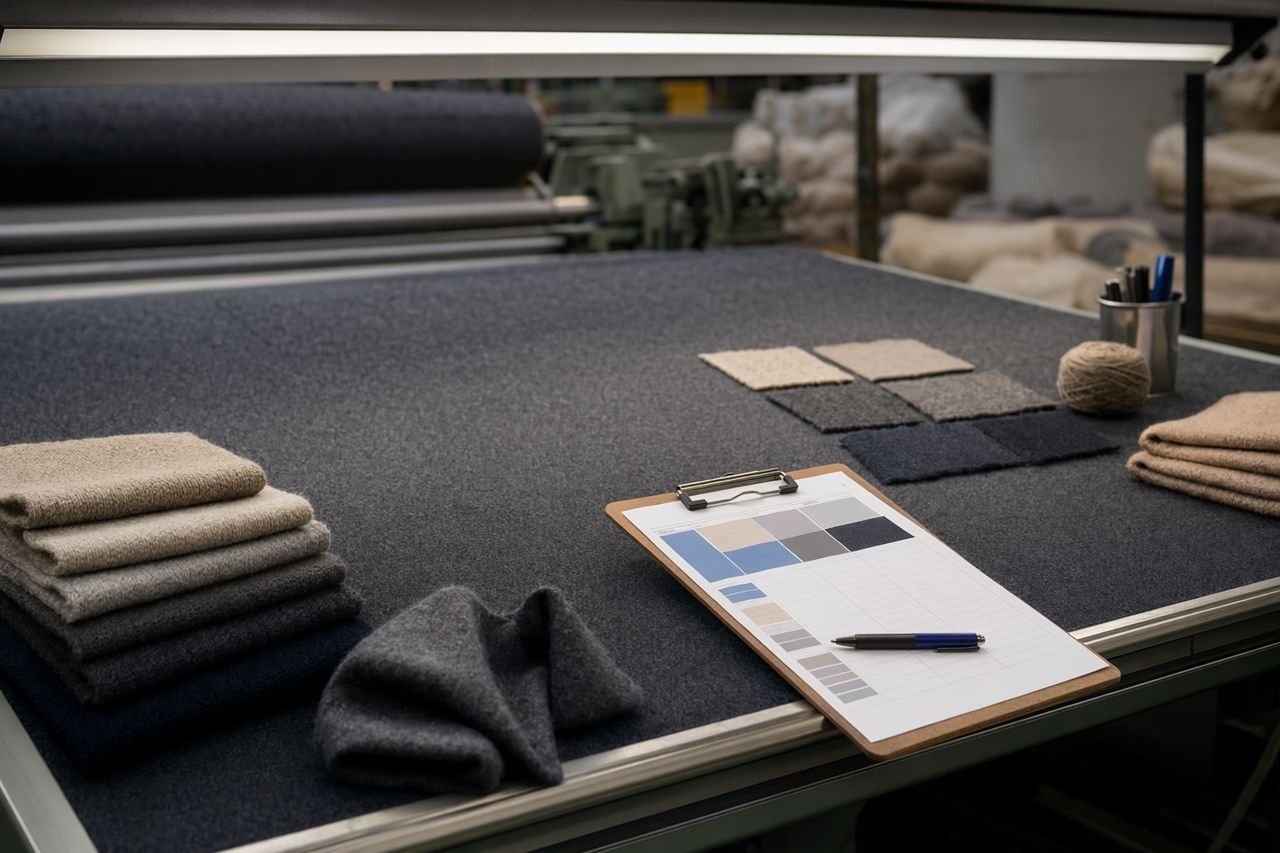
A practical felting map does not need to be complicated. Start with four columns: fiber, machine, chemistry, and handling. For each production lot, mark the risk level as low, watch, or high.
A simple mill-floor scoring method
- Low: normal lot history, stable machine path, known bath behavior, standard handling
- Watch: one variable has changed, such as shade depth, blend, machine load, or auxiliary package
- High: multiple variables have changed, or the lot has already shown shrink, harshness, creasing, or shade sensitivity
When a finishing issue appears, review the map before changing chemistry. Ask:
- Did the incoming fiber or fabric route change?
- Did the machine load, pressure, circulation, or fabric path change?
- Did the bath environment drift from the intended range?
- Did wet handling, queue time, or transfer practice change?
- Is the defect uniform, localized, edge-based, crease-based, or lot-wide?
The answer often points to the correction.
Where enzyme solutions fit in shrink and surface control
Enzyme systems can support wool finishing by modifying surface behavior in a controlled way. In the right process window, they can help mills pursue softer handle, cleaner surface appearance, reduced fuzz, improved finish consistency, and lower reliance on harsher routes.
The commercial value is not only the chemistry itself. It is the ability to run the process repeatedly with confidence.
For a finishing manager, useful enzyme support should help answer questions such as:
- Will this finish preserve shade on our darker and more sensitive colors?
- Can we reduce surface harshness without weakening the fiber?
- Can we lower rework caused by unstable shrink or variable handle?
- Will the process tolerate our real bath conditions?
- Can operators understand the control points clearly?
- Can we scale from trial to production without rewriting the mill routine?
Lanefold focuses on those production questions when recommending enzyme solutions for wool processing mills.
Common felting patterns and what they suggest
Lot-wide tightening
Likely risk zones: fiber history, bath environment, overall machine action.
A uniform issue usually means the whole lot experienced the same stress. Review incoming material, bath transitions, heat profile, and total wet process intensity.
Edge felting or edge harshness
Likely risk zones: machine contact, fabric path, tension, loading.
Edges often reveal uneven mechanical exposure. Check guides, rollers, circulation pattern, and whether the fabric is tracking consistently.
Crease-related felting
Likely risk zones: loading, rope formation, dwell time, wet staging.
Creases concentrate pressure and abrasion. Reduce crowding, improve movement, and avoid long holds while wet.
Shade dulling or surface whitening
Likely risk zones: chemistry compatibility, surface abrasion, rinse shock.
Shade changes can come from excess surface disturbance or incompatible bath conditions. Review auxiliary compatibility and compare affected versus unaffected shades.
Variable handle within one lot
Likely risk zones: liquor movement, machine loading, uneven exposure, transfer practice.
Handle variation often means the fabric did not receive the same process history throughout the batch.
Build the control plan before the next trial
Before changing a wool finishing route, align the technical and production teams on the risk map. The most useful trial plan includes:
- Incoming lot description and previous process history
- Target handle, shrink behavior, surface cleanliness, and shade tolerance
- Machine selected for scale-up, not only for convenience
- Bath conditions and known carryover risks
- Operator instructions for loading, movement, rinsing, and transfer
- Agreed pass criteria for shrink, handle, appearance, shade, and strength
- A comparison against the mill’s current standard finish
This creates a cleaner decision: did the enzyme solution improve the process under real mill conditions, and can the mill reproduce it?
What to ask an enzyme supplier before production adoption
When selecting an enzyme partner, the finishing team should go beyond product fit and ask about operating fit.
Useful questions include:
- What wool applications is the solution designed for?
- What process sensitivities should the mill control most closely?
- How should we evaluate handle, surface effect, shrink behavior, shade, and strength together?
- What auxiliaries or carryover conditions should be reviewed before trial?
- How should we structure a production-scale trial to avoid false positives?
- What documentation will operators need to keep lots consistent?
A strong supplier will help reduce uncertainty, not add complexity.
Practical takeaway
Felting risk is a system. Chemistry is important, but it is not alone. The most reliable wool finishing results come from matching enzyme selection with controlled fiber input, stable machine action, compatible bath conditions, and gentle wet handling.
When those four zones are mapped together, mills can protect softness, manage shrink, preserve shade, reduce rework, and make finishing decisions with more confidence.
Request a quote for your wool finishing process
If your mill is reviewing enzymatic options for wool shrink control, handle improvement, or surface cleanliness, Lanefold can help assess the process window and recommend a suitable trial direction.
Request a quote through the on-site form and share your fabric type, current route, target finish, and main production constraint.